The Role of Peatlands in Global Carbon Sequestration
The Role of Peatlands in Global Carbon Sequestration
Peatlands, a unique type of wetland ecosystem, are among the most efficient and significant terrestrial carbon sinks on Earth. Covering only about 3% of the world's land area, these waterlogged environments store an astonishing amount of carbon – twice as much as all the world's forests combined. Their critical role in global carbon sequestration makes them indispensable allies in the fight against climate change, yet they remain one of the most threatened ecosystems globally. Understanding the ecology of peatlands and their carbon dynamics is crucial for appreciating their value and ensuring their protection.
What are Peatlands?
Peatlands are wetlands characterized by the accumulation of partially decayed organic matter, known as peat, under waterlogged conditions. The persistent saturation of water creates anaerobic (oxygen-deficient) environments that inhibit the complete decomposition of plant material. Over thousands of years, this slow decomposition leads to the buildup of deep layers of peat, which is essentially stored carbon.
Peatlands can be broadly categorized into two main types:
- Bogs: These are ombrotrophic peatlands, meaning they receive all their water and nutrients from precipitation. They are typically acidic and nutrient-poor, dominated by Sphagnum mosses.
- Fens: These are minerotrophic peatlands, receiving water and nutrients from groundwater, surface runoff, and precipitation. They are generally less acidic and more nutrient-rich than bogs, supporting a wider variety of plant species.
Regardless of type, the defining characteristic is the waterlogged soil that prevents full decomposition and allows for carbon accumulation.
The Carbon Sequestration Powerhouse
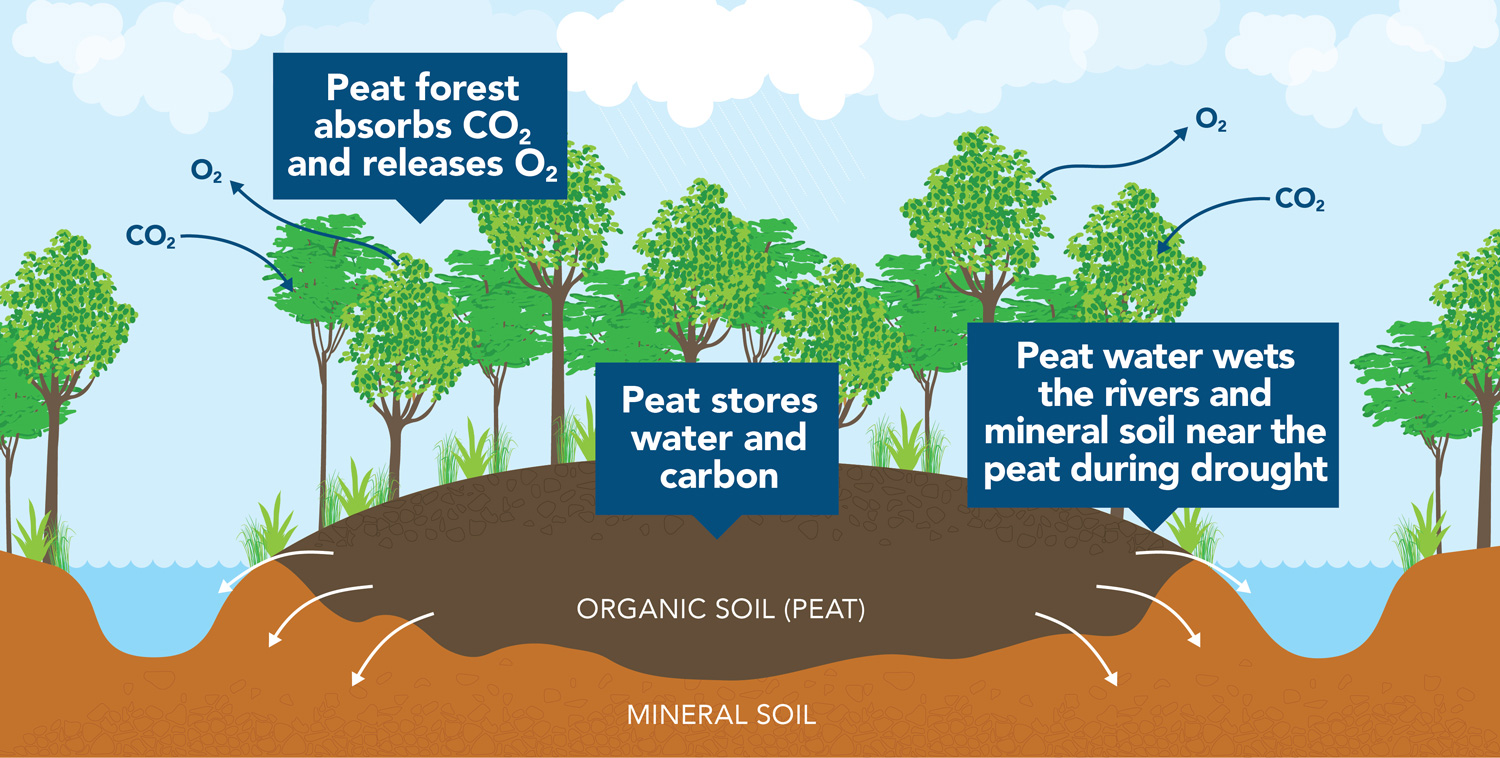
The primary ecological significance of peatlands lies in their unparalleled capacity for long-term carbon sequestration. As plants grow in peatlands, they absorb carbon dioxide from the atmosphere through photosynthesis. When these plants die, the waterlogged conditions prevent their complete decay, and their organic matter is slowly incorporated into the peat layer. This process effectively locks away carbon from the atmosphere for millennia.
Globally, peatlands store an estimated 500-700 gigatons of carbon, representing a significant portion of the Earth's terrestrial carbon pool. This makes them a vital natural climate solution. Intact peatlands continuously remove carbon from the atmosphere, acting as a natural brake on global warming.
Threats to Peatlands and Carbon Release
Despite their immense value, peatlands are under severe threat from human activities, leading to the release of their stored carbon back into the atmosphere. The main threats include:
1. Drainage for Agriculture and Forestry
Historically, vast areas of peatlands have been drained for agricultural expansion (e.g., palm oil plantations, crop cultivation) and commercial forestry. Drainage introduces oxygen into the peat, leading to rapid decomposition of the organic matter and the release of large quantities of CO2 and other greenhouse gases (such as methane and nitrous oxide) into the atmosphere. Drained peatlands become significant sources of greenhouse gas emissions.
2. Peat Extraction
Peat is extracted for use as fuel, in horticulture (as a growing medium), and for other industrial purposes. This destructive practice directly removes the stored carbon and destroys the ecosystem, leading to massive carbon emissions and habitat loss.
3. Wildfires
Drained peatlands are highly susceptible to wildfires, especially during dry periods. Peat fires can smolder underground for months or even years, releasing enormous amounts of carbon and air pollutants. These fires are incredibly difficult to extinguish and contribute significantly to regional and global greenhouse gas emissions.
4. Climate Change
Climate change itself poses a threat to peatlands. Increased temperatures and altered precipitation patterns can lead to drier conditions, making peatlands more vulnerable to drainage and fires, creating a dangerous feedback loop.
Ecological Impacts Beyond Carbon
Beyond their role in carbon sequestration, peatlands provide a range of other crucial ecosystem services:
- Biodiversity Hotspots: They support unique and specialized flora and fauna, including rare plants, insects, and birds adapted to acidic, waterlogged conditions.
- Water Regulation: Peatlands act as natural sponges, regulating water flow, reducing flood risk, and maintaining water quality in surrounding areas.
- Water Purification: They filter pollutants and excess nutrients from water, contributing to clean freshwater supplies.
Conservation and Restoration Efforts
Protecting and restoring peatlands is a highly effective and cost-efficient climate change mitigation strategy. Conservation efforts focus on:
- Preventing Further Drainage: Implementing policies and regulations to halt the drainage of intact peatlands.
- Rewetting Degraded Peatlands: Re-establishing water levels in drained peatlands to stop decomposition and allow for peat formation to resume. This is a key restoration technique.
- Sustainable Management: Promoting sustainable land use practices in and around peatlands.
- Public Awareness: Educating stakeholders about the importance of peatlands.
International initiatives, such as the Global Peatlands Initiative, are working to raise awareness, promote research, and support conservation and restoration projects worldwide. Investing in peatland protection is a direct investment in climate stability and biodiversity preservation.
Conclusion
Peatlands are silent giants in the global carbon cycle, holding vast reserves of carbon that are critical for regulating Earth's climate. These unique wetland ecosystems provide invaluable services, from biodiversity support to water regulation. However, human activities, particularly drainage and extraction, are rapidly degrading peatlands, turning them from carbon sinks into significant sources of greenhouse gas emissions. Urgent and concerted global action to protect and restore peatlands is essential to mitigate climate change, conserve biodiversity, and ensure the long-term health of our planet. Safeguarding these ancient carbon stores is a powerful and often underestimated strategy in our collective effort to build a sustainable future.