The Importance of Mangrove Ecosystems
The Importance of Mangrove Ecosystems
Mangrove forests are unique and vital coastal ecosystems found in tropical and subtropical regions worldwide. These salt-tolerant trees and shrubs thrive in intertidal zones, forming dense, intricate forests that bridge the gap between land and sea. Often overlooked, mangroves provide an extraordinary array of ecological services, acting as natural barriers, nurseries for marine life, and significant carbon sinks. Understanding their multifaceted importance is crucial for their conservation in the face of increasing global threats.
1. Coastal Protection and Resilience
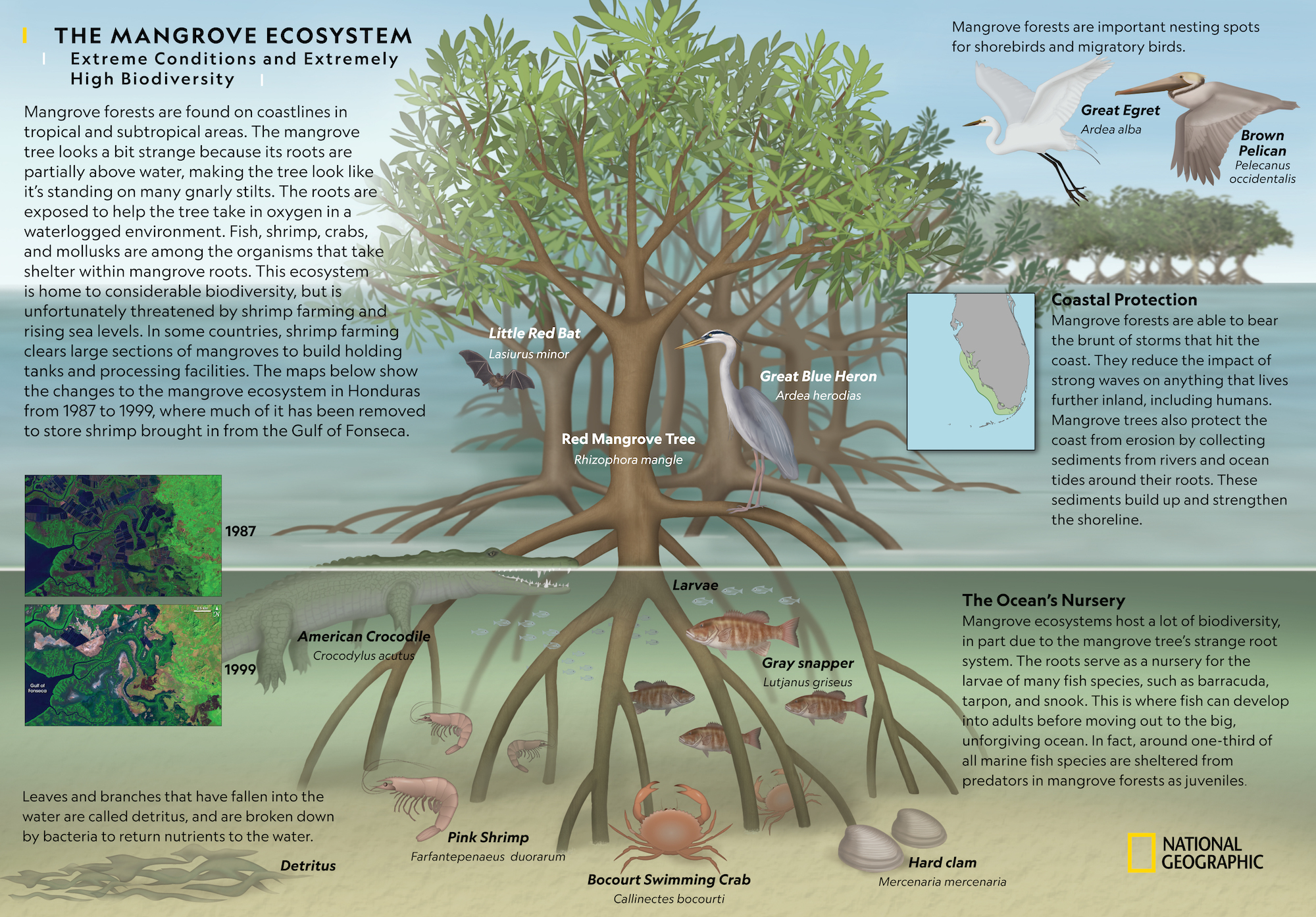
One of the most critical functions of mangrove forests is their role in coastal protection. Their dense network of prop roots and pneumatophores (aerial roots) helps to stabilize shorelines, preventing erosion from waves, tides, and currents. These intricate root systems also dissipate wave energy, significantly reducing the impact of storm surges, tsunamis, and hurricanes on coastal communities and infrastructure. Studies have shown that mangroves can reduce wave height by as much as 66% over 100 meters of forest, offering a natural and cost-effective defense against extreme weather events.
2. Nurseries for Marine Life and Biodiversity Hotspots
Mangrove forests serve as essential nurseries and breeding grounds for a vast array of marine and terrestrial species. The sheltered, nutrient-rich waters within mangrove roots provide a safe haven for juvenile fish, crustaceans (crabs, shrimp), and mollusks, protecting them from predators and strong currents. Many commercially important fish species, including snapper, barracuda, and groupers, spend their early life stages in mangroves before migrating to coral reefs or open waters. This makes mangroves vital for supporting healthy fisheries and maintaining marine biodiversity.
Beyond marine life, mangroves also provide habitat for numerous bird species, reptiles, and mammals, some of which are endemic to these unique environments. The complex structure of the forest offers nesting sites, foraging areas, and refuge, contributing to the overall ecological richness of coastal zones.
3. Water Quality Improvement
Mangroves act as natural filters, trapping sediments, pollutants, and excess nutrients (such as nitrogen and phosphorus) from land-based runoff before they reach delicate marine ecosystems like coral reefs and seagrass beds. The dense root systems slow down water flow, allowing suspended particles to settle, thereby improving water clarity. This filtration process is crucial for maintaining the health of adjacent marine habitats, which are often highly sensitive to sedimentation and pollution.
4. Carbon Sequestration and Climate Change Mitigation
Mangrove forests are exceptionally efficient carbon sinks, storing vast amounts of carbon in their biomass and, more significantly, in their waterlogged soils. They can sequester carbon at rates up to four times higher than terrestrial forests. The anaerobic conditions in mangrove soils slow down the decomposition of organic matter, allowing carbon to accumulate over centuries. This makes them a critical component of "blue carbon" ecosystems, which play a vital role in mitigating climate change by removing carbon dioxide from the atmosphere.
When mangroves are destroyed, this stored carbon is released back into the atmosphere, contributing to greenhouse gas emissions. Protecting and restoring mangroves is therefore a powerful nature-based solution for climate change mitigation and adaptation.
5. Economic and Livelihood Support
Mangroves provide numerous economic benefits to coastal communities. They support fisheries, supplying food and income. They also provide timber, fuelwood, and other non-timber forest products. The protection they offer to coastlines reduces the economic costs associated with storm damage and erosion. Furthermore, healthy mangrove ecosystems can support ecotourism, generating revenue through activities like birdwatching and kayaking.
Threats to Mangroves
Despite their immense value, mangrove forests are among the most threatened ecosystems globally. Major threats include:
- Aquaculture: Conversion of mangrove areas for shrimp and fish farms.
- Coastal Development: Urbanization, infrastructure development, and tourism resorts.
- Deforestation: Logging for timber, fuelwood, and charcoal production.
- Pollution: Runoff from agriculture, industry, and sewage.
- Climate Change: Sea-level rise and increased frequency of extreme weather events.
Conservation and Restoration Efforts
Recognizing the critical importance of mangroves, conservation and restoration efforts are gaining momentum worldwide. These include establishing protected areas, implementing sustainable management practices, and engaging local communities in conservation initiatives. Reforestation projects, where mangrove seedlings are planted in degraded areas, are also crucial for restoring these vital ecosystems. Effective conservation requires a combination of policy, community involvement, and scientific research.
Conclusion
Mangrove ecosystems are invaluable natural assets, providing a unique blend of ecological, economic, and social benefits. Their role in coastal protection, biodiversity support, water purification, and climate change mitigation makes them indispensable for the health of our planet and the well-being of coastal communities. The ongoing destruction of these forests represents a significant loss, underscoring the urgent need for global and local action to protect and restore these extraordinary habitats. Safeguarding mangroves is not just about preserving trees; it's about investing in the resilience of our coastlines, the richness of our marine life, and a sustainable future for all.